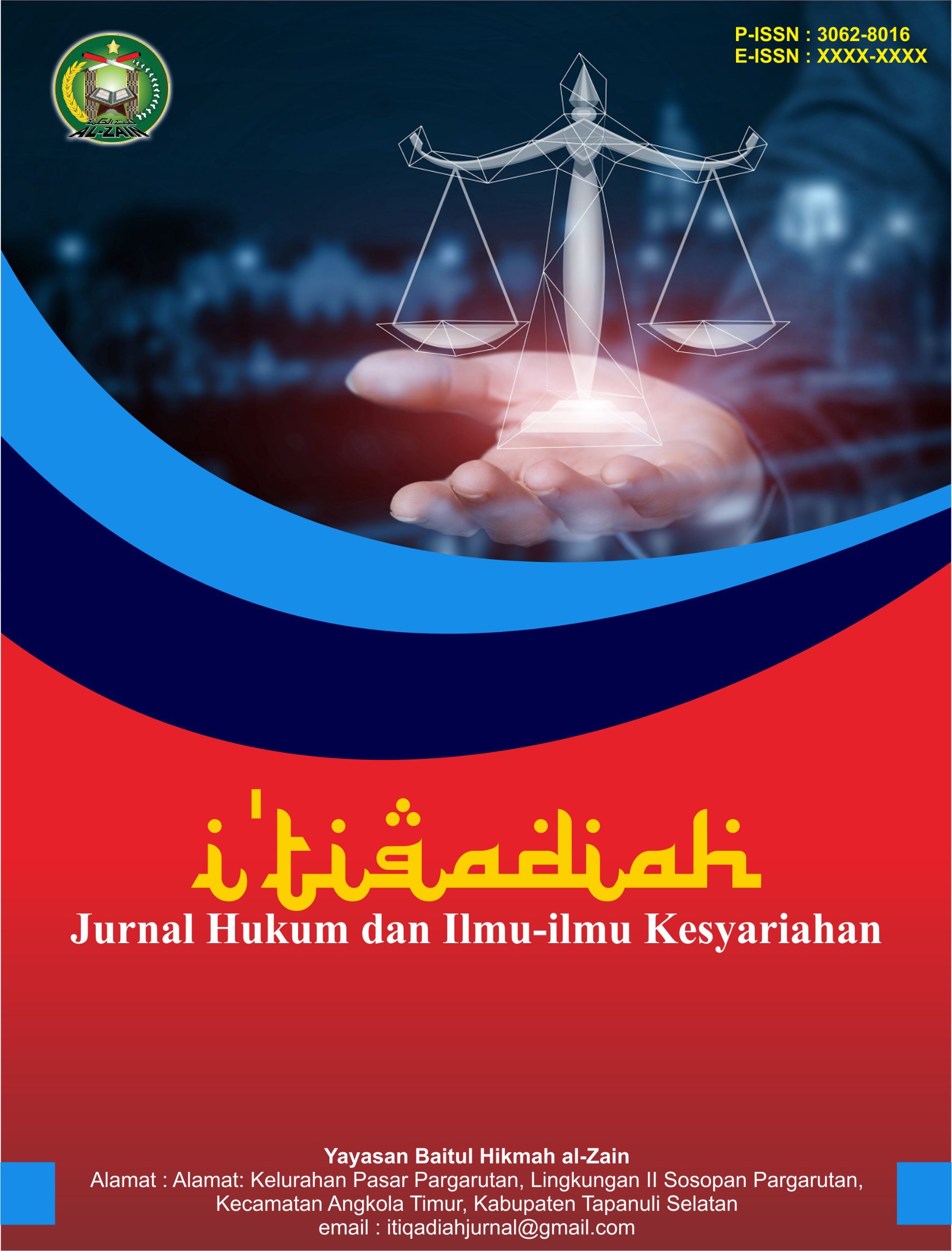
PERTANGGUNGJAWABAN PIDANA TERHADAP PENYALAHGUNAAN DEEPFAKE ARTIFICIAL INTELLIGENCE DALAM PERSPEKTIF KUHP NASIONAL DAN UU ITE
DOI:
https://doi.org/10.63424/itiqadiah.v3i3.771Keywords:
Deepfake, Artificial Intelligence, Indonesian Criminal Law, Electronic Evidence, Cybercrime.Abstract
The advancement of Artificial Intelligence (AI) has given rise to deepfake technology capable of manipulating faces, voices, and videos with such realism that they are difficult to distinguish from authentic content. In Indonesia, the misuse of deepfakes has garnered increasing attention following various viral incidents involving the manipulation of public figures' videos, fraud utilizing voice cloning, the dissemination of non-consensual pornography, and the spread of disinformation via digital media—all of which have caused both material and non-material harm. This phenomenon raises questions regarding the adequacy of existing criminal law provisions to prosecute perpetrators and provide legal protection for victims. This study aims to analyze the forms of criminal liability associated with deepfake misuse from the perspectives of the National Criminal Code and the Electronic Information and Transactions (ITE) Law, as well as their relationship with other supporting regulations. The research employs a normative-juridical method utilizing statutory, conceptual, and case-study approaches focused on viral deepfake incidents in Indonesia. Primary, secondary, and tertiary legal materials were analyzed qualitatively through systematic and comparative interpretation techniques. The findings indicate that deepfake misuse potentially satisfies the elements of various criminal offenses—such as the unlawful dissemination of electronic information, fraud, defamation, extortion, and violations of privacy rights—yet existing regulations remain fragmented and do not explicitly address the specific characteristics of AI-based crimes. Consequently, there is a need for adaptive criminal law reform, the harmonization of digital regulations, and the strengthening of electronic evidentiary mechanisms to ensure legal certainty, victim protection, and effective law enforcement against deepfake-related crimes in Indonesia.
Abstrak. Perkembangan Artificial Intelligence (AI) telah melahirkan teknologi deepfake yang mampu memanipulasi wajah, suara, dan video secara sangat realistis sehingga sulit dibedakan dari konten autentik. Di Indonesia, penyalahgunaan deepfake semakin mendapat perhatian setelah muncul berbagai kasus viral berupa manipulasi video tokoh publik, penipuan menggunakan tiruan suara, penyebaran konten pornografi non-konsensual, serta disinformasi melalui media digital yang menimbulkan kerugian materiil maupun immateriil. Fenomena tersebut memunculkan persoalan mengenai kecukupan pengaturan hukum pidana dalam menjerat pelaku dan memberikan perlindungan hukum kepada korban. Penelitian ini bertujuan menganalisis bentuk pertanggungjawaban pidana terhadap penyalahgunaan deepfake dalam perspektif Kitab Undang-Undang Hukum Pidana Nasional dan Undang-Undang Informasi dan Transaksi Elektronik beserta keterkaitannya dengan regulasi pendukung lainnya. Penelitian menggunakan metode yuridis normatif dengan pendekatan perundang-undangan, konseptual, dan studi kasus terhadap beberapa fenomena deepfake yang viral di Indonesia. Bahan hukum primer, sekunder, dan tersier dianalisis secara kualitatif melalui teknik interpretasi sistematis dan komparatif. Hasil penelitian menunjukkan bahwa penyalahgunaan deepfake berpotensi memenuhi unsur berbagai tindak pidana, seperti penyebaran informasi elektronik yang melawan hukum, penipuan, pencemaran nama baik, pemerasan, serta pelanggaran terhadap hak privasi, namun pengaturan yang ada masih bersifat tersebar dan belum secara eksplisit mengakomodasi karakteristik kejahatan berbasis AI. Oleh karena itu, diperlukan pembaruan kebijakan hukum pidana yang adaptif, harmonisasi regulasi digital, serta penguatan mekanisme pembuktian elektronik untuk mewujudkan kepastian hukum, perlindungan korban, dan efektivitas penegakan hukum terhadap kejahatan deepfake di Indonesia.
Downloads
Published
Issue
Section
License
Copyright (c) 2026 I’tiqadiah: Jurnal Hukum dan Ilmu-ilmu Kesyariahan

This work is licensed under a Creative Commons Attribution-NonCommercial-ShareAlike 4.0 International License.